Showing posts with label Cities to visit. Show all posts

Saturday, 13 April 2013

The land that gave birth to the first great civilization did not really need an introduction. The pyramids, the minarets, the Nile, all the landscapes of Egypt are beautiful.
Visitors are often surprised to discover that the legendary pyramids are only the tip of the iceberg whose full archaeological Egypt. Pharaonic nations, ancient Greeks, Romans, Christians and Arab dynasties have all played their role in the structuring of Egypt, choose from the discoveries of architectural wealth of the country.
Cairo, around a medieval core that has remained unchanged since the founding era of Islam. Upstream, Luxor, site of ancient Thebes, is lined with warrens of opulent burial chambers and boasts some of the most formidable monuments in all antiquity. Further south of Aswan, even more geometrically imposing temples write a testament to the power of gods and pharaohs archaic omnipotent. It is here that the Nile discovered sailing old on a felucca (Egyptian sailboat) in the hands of dominant currents and winds.

In the West, Egypt, the ocean of sand stretches infinitely great Sahara desert, with a handful of food, oasis, solitary islands of green. Medieval fortresses cower here, interspersed with bubbling springs and ghostly rock formations.Meanwhile, the deep and crystal clear Red Sea lie brilliantly awash in coral where, surrounded by a frenzy of aquatic life underwater. In the deserts of Sinai, interior, visitors can climb the mountain where God wrote the commandments of Moses, and spend their last days in happiness Halcyon coastal Dahab.
Although it is one of the most politically stable countries in the region, modern Egypt is not without conflict. Thirty years of authoritarian rule, an erratic economy and rising living costs fan the flames of unrest. However, many Egyptians are flexible, and visitors making the journey here will find a very old story, but a modern hospitality.

Egypt, The land that gave birth to the first great civilization

The land that gave birth to the first great civilization did not really need an introduction. The pyramids, the minarets, the Nile, all the landscapes of Egypt are beautiful.
Visitors are often surprised to discover that the legendary pyramids are only the tip of the iceberg whose full archaeological Egypt. Pharaonic nations, ancient Greeks, Romans, Christians and Arab dynasties have all played their role in the structuring of Egypt, choose from the discoveries of architectural wealth of the country.
Cairo, around a medieval core that has remained unchanged since the founding era of Islam. Upstream, Luxor, site of ancient Thebes, is lined with warrens of opulent burial chambers and boasts some of the most formidable monuments in all antiquity. Further south of Aswan, even more geometrically imposing temples write a testament to the power of gods and pharaohs archaic omnipotent. It is here that the Nile discovered sailing old on a felucca (Egyptian sailboat) in the hands of dominant currents and winds.

In the West, Egypt, the ocean of sand stretches infinitely great Sahara desert, with a handful of food, oasis, solitary islands of green. Medieval fortresses cower here, interspersed with bubbling springs and ghostly rock formations.Meanwhile, the deep and crystal clear Red Sea lie brilliantly awash in coral where, surrounded by a frenzy of aquatic life underwater. In the deserts of Sinai, interior, visitors can climb the mountain where God wrote the commandments of Moses, and spend their last days in happiness Halcyon coastal Dahab.
Although it is one of the most politically stable countries in the region, modern Egypt is not without conflict. Thirty years of authoritarian rule, an erratic economy and rising living costs fan the flames of unrest. However, many Egyptians are flexible, and visitors making the journey here will find a very old story, but a modern hospitality.
Cairo is a huge city containing many districts tourism, restaurants, hotels and nightlife.
Cairo is the capital of Egypt and, with a population of over 16 million people, one of the largest cities in Africa and the Middle East (the regions where it overlaps perfectly ). It is also the 19th largest city in the world, and among the most densely populated cities in the world.
Situated on the Nile, Cairo is famous for its own history, preserved in the fabulous medieval Islamic and Coptic sites in Old Cairo. Egyptian Museum in the center of town is a must, with its countless Ancient Egyptian objects, is that shopping at Khan al-Khalili bazaar. No trip to Cairo would be complete, for example, without a visit to the Pyramids of Giza and Saqqara pyramid complex near where visitors can see the first step pyramid built by the Egyptian architect Imhotep for the third Pharaoh Djoser Dynasty.
Though firmly attached to the past, Cairo is also a modern and dynamic society. Midan Tahrir area situated in downtown Cairo, built in the 19th century during the reign of Khedive Ismail, has strived to be a "Paris on the Nile".There are also a number of more modern suburbs including Ma'adi and Heliopolis, while Zamalek is a quiet area on Gezira Island, with upscale shops. Cairo is best in the fall or spring when the weather is not so hot. A felucca ride on the Nile is a good way to escape the busy city, as a visit to Al-Azhar Park.

A selection of places to visit in Cairo
The Pyramids of Giza and the Sphinx. The only remaining monuments of the Seven Wonders of the ancient world, it is the attraction of the country's most famous tourist. 
Egyptian Museum on Midan Tahrir. first collection of ancient Egyptian world of objects.
The Citadel in Islamic Cairo. A large castle built by Salah Al-Din. Are also part of the water pipes (Majra Al-Oyouon) are still there, these pipes used to transport water from the Nile to the Citadel. 
-The Al-Azhar Mosque. One of the pillars of Islamic thought and home to the oldest university in the world. 
- Ibn Tulun, near Sayida Zeinab. The oldest mosque, and perhaps the most beautiful Cairo. 
- The Coptic Museum, in Coptic Cairo. 
-The "Hanging Church (Church of the Virgin Mary), in Zabaleen Area (District Manshiet Nasser) below Mokkatam Hills, not far from the Citadel 
- Cairo Tower (185 m./610 ft.) on Gezira Island offers a 360 Cairo and the Pyramids of Giza, far away to the west. 
- Al-Azhar Park. A recently opened landscaped gardens overlooking the Citadel 
Khan El Khalili. Cairo souk area where visitors will find many merchants selling perfume, spices, Gold, Egyptian hand craft. 
- Abdeen Palace. Located approximately one kilometer from the Midan El-Tahrir a five minute walk, home of the last king of Egypt King Farouk into exile. 
- The Pharaonic Village. It is about twenty minutes drive from the city center.

places to visit in Cairo in Egypt

Cairo is a huge city containing many districts tourism, restaurants, hotels and nightlife.
Cairo is the capital of Egypt and, with a population of over 16 million people, one of the largest cities in Africa and the Middle East (the regions where it overlaps perfectly ). It is also the 19th largest city in the world, and among the most densely populated cities in the world.
Situated on the Nile, Cairo is famous for its own history, preserved in the fabulous medieval Islamic and Coptic sites in Old Cairo. Egyptian Museum in the center of town is a must, with its countless Ancient Egyptian objects, is that shopping at Khan al-Khalili bazaar. No trip to Cairo would be complete, for example, without a visit to the Pyramids of Giza and Saqqara pyramid complex near where visitors can see the first step pyramid built by the Egyptian architect Imhotep for the third Pharaoh Djoser Dynasty.
Though firmly attached to the past, Cairo is also a modern and dynamic society. Midan Tahrir area situated in downtown Cairo, built in the 19th century during the reign of Khedive Ismail, has strived to be a "Paris on the Nile".There are also a number of more modern suburbs including Ma'adi and Heliopolis, while Zamalek is a quiet area on Gezira Island, with upscale shops. Cairo is best in the fall or spring when the weather is not so hot. A felucca ride on the Nile is a good way to escape the busy city, as a visit to Al-Azhar Park.

A selection of places to visit in Cairo
The Pyramids of Giza and the Sphinx. The only remaining monuments of the Seven Wonders of the ancient world, it is the attraction of the country's most famous tourist. 
Egyptian Museum on Midan Tahrir. first collection of ancient Egyptian world of objects.
The Citadel in Islamic Cairo. A large castle built by Salah Al-Din. Are also part of the water pipes (Majra Al-Oyouon) are still there, these pipes used to transport water from the Nile to the Citadel. 
-The Al-Azhar Mosque. One of the pillars of Islamic thought and home to the oldest university in the world. 
- Ibn Tulun, near Sayida Zeinab. The oldest mosque, and perhaps the most beautiful Cairo. 
- The Coptic Museum, in Coptic Cairo. 
-The "Hanging Church (Church of the Virgin Mary), in Zabaleen Area (District Manshiet Nasser) below Mokkatam Hills, not far from the Citadel 
- Cairo Tower (185 m./610 ft.) on Gezira Island offers a 360 Cairo and the Pyramids of Giza, far away to the west. 
- Al-Azhar Park. A recently opened landscaped gardens overlooking the Citadel 
Khan El Khalili. Cairo souk area where visitors will find many merchants selling perfume, spices, Gold, Egyptian hand craft. 
- Abdeen Palace. Located approximately one kilometer from the Midan El-Tahrir a five minute walk, home of the last king of Egypt King Farouk into exile. 
- The Pharaonic Village. It is about twenty minutes drive from the city center.
Alexandria  is the second largest city in Egypt (3.5 million people), its largest seaport and the country's window on the Mediterranean Sea. It's a faded shade of its former glorious cosmopolitan self, but still worth a visit for its many cultural attractions and still palpable glimpses of its past. 
Alexandria has a Mediterranean climate, with hot, humid summers and mild winters with some rain. The day can be humid in summer, with summer temperatures averaging 31 ° C, but the evenings are usually cooler and windy, especially by the Corniche. Winters can be cold, with minimum down times during the day to 12 ° C, with occasional rain and sometimes hail. Humidity is high throughout the year. The best time to visit Alexandria is in spring (March to June) and autumn (September to November).

What you will see in Alexandria 
Historical monuments
The Citadel of Qaitbay, Ras el-Tin. One of the icons of the city in a beautiful location, the fortress overlooks the Mediterranean Sea and the city itself. Created by the Mamluk Sultan Abdul-Nasser in 1477 AD Bay Qa'it but razed and reconstructed twice since. This citadel was built in 1480 by Sultan Qaitbay on the site of the Pharos Lighthouse, to protect the city of crusaders who used to attack the city by sea The Citadel is situated at the entrance of the port of East the eastern tip of the island of Pharos. It was erected on the exact site of the famous Lighthouse of Alexandria. The lighthouse continued to function until the time of the Arab conquest, then several disasters occurred and the shape of the lighthouse was changed to some extent, but it continued to operate. During the 11thcentury an earthquake destroyed the top of the lighthouse and the bottom was used as a watchtower. A small mosque was built on top.About 1480 AD the place was fortified buildings in the coastal defense. Later, the castle was built citadel in search of prison for princes and state-man. It is now a maritime museum.
Mostafa Kamel Cemetery. The cemetery includes four tombs dating from the second century BC, which are all in excellent condition and nicely decorated. The cemetery is named Mostafa Kamel, one of the greatest legends of Egypt politics of the twentieth century. It was he who uttered the famous phrase: ". If I was not born as an Egyptian, I would like to be an Egyptian "


Kom el-Shouqafa, Karmouz. Kom el-Shouqafa is the Arabic translation of the ancient Greek name, Lofus Kiramaikos, "pile of shards" or "potsherds." His real name was ancient Egyptian Ra-Qedillies, and it is located on the site where the village harbor and fishing Rhakotis, the oldest part of Alexandria that preceded Alexander the Great, was located.Underground tunnels of the catacombs is in the densely populated neighborhood of Karmouz east of Alexandria. The catacombs were most probably used as a private tomb, for a single wealthy family and later converted to a public cemetery. They consist of a building at ground level, which probably served as funerary chapel, a deep spiral stairway and three underground levels for the funerary ritual and entombment. The catacombs are unique both for their plan and decoration, which is an integration of cultures and traditions of the Egyptians, Greeks and Romans.
Pompey's Pillar, Karmouz. An ancient monument, this granite column 25 meters high was built in honor of the Emperor Diocletian in the year 297. The confined space where the column also has other ruins and sculptures as oracle Serapium. Next to this area is a very important commercial center for fabric and furniture called "El Saa3a," where you can find many types of fabrics or clothing.
Roman theater, Kom El-Dikka. Built in the 2nd century AD, this Roman amphitheater has 13 semicircular floors of white and gray marble, with marble seats for up to 800 spectators, galleries and sections of mosaic flooring. In the Ptolemaic period this area was the Park of Pan, a pleasure garden surrounded by Roman villas and baths. The
Montazah Palace, El Montazah Built in 1892 by Abbas II of Egypt Abbas Hilmi Pasha, the last khedive of Egypt. One of the buildings of the palace, Haramlek now contains a casino on the ground floor and a museum of royal relics on the upper levels, while Salamlek has been transformed into a luxury hotel (see Sleep). Parts of its extensive gardens (over 200 acres) are open to the public. There is an entrance fee for the park. THE 5. change
Tomb of the Unknown Soldier, Mansheya. Egypt has a Tomb of the Unknown Soldier honoring the military. change
Ras el-Tin Palace, Ras el-Tin. Not open to visitors, alas.
Presidential Palace, Montazah.
Museums
Alexandria National Museum, Latin Quarter. History Museum with more than 1800 archaeological pieces exhibited chronologically: the basement is devoted to the prehistoric and Pharaonic the first floor of the Graeco-Roman on the second floor of the Islamic and Coptic era that puts value of the artifacts raised during recent underwater excavations.
Greco-Roman Museum, the Latin Quarter. Closed. A history museum with a large collection of mostly dating from the 3rd century BC to the 3rd century AD, covering the Ptolemaic and Roman periods. Closed for renovation since 2008.
Museum of Fine Arts, Moharram Bey. It contains many royal jewels and precious metals.
For the National Institute of Oceanography and Fisheries, Anfoushi (next Qaitbey). Aquarium and Museum.
Royal Jewelry Museum, zezenia. It contains many royal jewels and precious metals. It was reopened to the public after renovation recently.
Religious Monuments
El-Mursi Abul-Abbas Mosque, Anfoushi. Constructed in 1775 by Algerians, the mosque was built on the tomb of the famous Sufi saint of the thirteenth century, Ahmed Abu al-Abbas al-Mursi. The walls of the mosque are dressed in artificial stone, while the minaret, located on the south side, stands 73 meters.
Mosque Attarine Attarine. Originally a church dedicated to St. Athanasius in 370 and was converted into a mosque after the Muslim conquest of Egypt.
Modern Alexandria
Bibliotheca Alexandrina, Shatby. Open every day except Tuesday 11:00 to 7:00 p.m., but opens at 3:00 p.m. on Friday and Saturday. A huge modern library and a research center built on the site of the ancient Library of Alexandria. It also has a large conference center and planetarium, as well as the display of ancient texts in the collection and other special exhibitions.
Corniche. The Corniche is a glorious bridge 15 km (wharf / pier / boardwalk) along the harbor dotted with restaurants, markets and historic sites.

Historical monuments of Alexandria in Egypt?

Alexandria  is the second largest city in Egypt (3.5 million people), its largest seaport and the country's window on the Mediterranean Sea. It's a faded shade of its former glorious cosmopolitan self, but still worth a visit for its many cultural attractions and still palpable glimpses of its past. 
Alexandria has a Mediterranean climate, with hot, humid summers and mild winters with some rain. The day can be humid in summer, with summer temperatures averaging 31 ° C, but the evenings are usually cooler and windy, especially by the Corniche. Winters can be cold, with minimum down times during the day to 12 ° C, with occasional rain and sometimes hail. Humidity is high throughout the year. The best time to visit Alexandria is in spring (March to June) and autumn (September to November).

What you will see in Alexandria 
Historical monuments
The Citadel of Qaitbay, Ras el-Tin. One of the icons of the city in a beautiful location, the fortress overlooks the Mediterranean Sea and the city itself. Created by the Mamluk Sultan Abdul-Nasser in 1477 AD Bay Qa'it but razed and reconstructed twice since. This citadel was built in 1480 by Sultan Qaitbay on the site of the Pharos Lighthouse, to protect the city of crusaders who used to attack the city by sea The Citadel is situated at the entrance of the port of East the eastern tip of the island of Pharos. It was erected on the exact site of the famous Lighthouse of Alexandria. The lighthouse continued to function until the time of the Arab conquest, then several disasters occurred and the shape of the lighthouse was changed to some extent, but it continued to operate. During the 11thcentury an earthquake destroyed the top of the lighthouse and the bottom was used as a watchtower. A small mosque was built on top.About 1480 AD the place was fortified buildings in the coastal defense. Later, the castle was built citadel in search of prison for princes and state-man. It is now a maritime museum.
Mostafa Kamel Cemetery. The cemetery includes four tombs dating from the second century BC, which are all in excellent condition and nicely decorated. The cemetery is named Mostafa Kamel, one of the greatest legends of Egypt politics of the twentieth century. It was he who uttered the famous phrase: ". If I was not born as an Egyptian, I would like to be an Egyptian "


Kom el-Shouqafa, Karmouz. Kom el-Shouqafa is the Arabic translation of the ancient Greek name, Lofus Kiramaikos, "pile of shards" or "potsherds." His real name was ancient Egyptian Ra-Qedillies, and it is located on the site where the village harbor and fishing Rhakotis, the oldest part of Alexandria that preceded Alexander the Great, was located.Underground tunnels of the catacombs is in the densely populated neighborhood of Karmouz east of Alexandria. The catacombs were most probably used as a private tomb, for a single wealthy family and later converted to a public cemetery. They consist of a building at ground level, which probably served as funerary chapel, a deep spiral stairway and three underground levels for the funerary ritual and entombment. The catacombs are unique both for their plan and decoration, which is an integration of cultures and traditions of the Egyptians, Greeks and Romans.
Pompey's Pillar, Karmouz. An ancient monument, this granite column 25 meters high was built in honor of the Emperor Diocletian in the year 297. The confined space where the column also has other ruins and sculptures as oracle Serapium. Next to this area is a very important commercial center for fabric and furniture called "El Saa3a," where you can find many types of fabrics or clothing.
Roman theater, Kom El-Dikka. Built in the 2nd century AD, this Roman amphitheater has 13 semicircular floors of white and gray marble, with marble seats for up to 800 spectators, galleries and sections of mosaic flooring. In the Ptolemaic period this area was the Park of Pan, a pleasure garden surrounded by Roman villas and baths. The
Montazah Palace, El Montazah Built in 1892 by Abbas II of Egypt Abbas Hilmi Pasha, the last khedive of Egypt. One of the buildings of the palace, Haramlek now contains a casino on the ground floor and a museum of royal relics on the upper levels, while Salamlek has been transformed into a luxury hotel (see Sleep). Parts of its extensive gardens (over 200 acres) are open to the public. There is an entrance fee for the park. THE 5. change
Tomb of the Unknown Soldier, Mansheya. Egypt has a Tomb of the Unknown Soldier honoring the military. change
Ras el-Tin Palace, Ras el-Tin. Not open to visitors, alas.
Presidential Palace, Montazah.
Museums
Alexandria National Museum, Latin Quarter. History Museum with more than 1800 archaeological pieces exhibited chronologically: the basement is devoted to the prehistoric and Pharaonic the first floor of the Graeco-Roman on the second floor of the Islamic and Coptic era that puts value of the artifacts raised during recent underwater excavations.
Greco-Roman Museum, the Latin Quarter. Closed. A history museum with a large collection of mostly dating from the 3rd century BC to the 3rd century AD, covering the Ptolemaic and Roman periods. Closed for renovation since 2008.
Museum of Fine Arts, Moharram Bey. It contains many royal jewels and precious metals.
For the National Institute of Oceanography and Fisheries, Anfoushi (next Qaitbey). Aquarium and Museum.
Royal Jewelry Museum, zezenia. It contains many royal jewels and precious metals. It was reopened to the public after renovation recently.
Religious Monuments
El-Mursi Abul-Abbas Mosque, Anfoushi. Constructed in 1775 by Algerians, the mosque was built on the tomb of the famous Sufi saint of the thirteenth century, Ahmed Abu al-Abbas al-Mursi. The walls of the mosque are dressed in artificial stone, while the minaret, located on the south side, stands 73 meters.
Mosque Attarine Attarine. Originally a church dedicated to St. Athanasius in 370 and was converted into a mosque after the Muslim conquest of Egypt.
Modern Alexandria
Bibliotheca Alexandrina, Shatby. Open every day except Tuesday 11:00 to 7:00 p.m., but opens at 3:00 p.m. on Friday and Saturday. A huge modern library and a research center built on the site of the ancient Library of Alexandria. It also has a large conference center and planetarium, as well as the display of ancient texts in the collection and other special exhibitions.
Corniche. The Corniche is a glorious bridge 15 km (wharf / pier / boardwalk) along the harbor dotted with restaurants, markets and historic sites.
Aswan is a city in the south of Egypt, some 680 km south of Cairo, just below the Aswan Dam and Lake Nasser, with a population of 275,000. Aswan is much quieter and smaller than cities of Cairo and Luxor. 
Aswan is the smallest of the three major tourist cities on the Nile. The most southerly of the three, it has a large population of Nubian people, mostly resettled from their homeland in the area flooded by Lake Nasser. Aswan has numerous granite quarries which are at the origin of most of the obelisks of Luxor. Aswan is the ancient Egyptian gateway to Africa.
What you will see in Aswan
Aswan city and even the eastern shore
Nubian Museum. Very well organized, the characteristics of Nubian treasures recovered before the flooding of Nubia.
Unfinished Obelisk, (south of Aswan). The largest obelisk known ancient carved directly bedrock.
Fatimid Cemetery (south end of Aswan). The old faded glory of the Fatimid empire can be seen on the cemetery in ruins.
Ferial Gardens (southern end of the Corniche). It is a pleasant walk, made even more enjoyable by the fact that you can walk right into the gardens Ferial at its southern end. A park that is as relaxing as beautiful.
The river and the islands
The island of Elephantine: Nubian villages of Aswan & Museum. Nubian villages of Siou and Koti occupy this island.Also houses the famous temples and nilometers Sati, Khnum (ancient rams head of God) and Pepinakht-Heqaib.Mövenpick Resort on the island. The Museum of Aswan at the southern end of the island houses objects found during escavations on Elephantine Island.
Aswan Botanical Gardens (on all Cooks island west of the island of Elephantine). Lord Kitchener, who owned 6.8 hectare island in the 1890s was converted into a botanical garden. Filled with birds and hundreds of species of plants and palm trees. Accessible via a felucca ride.
Seheyl Island (just north of the old Aswan Dam). 7:00 to 4:00 p.m.. Welcome Nubian villages. Well known for its excellent beaded jewelry. Also the location of the Famine Stele.
-Tombs of the Nobles. The hills of the northern West Bank are filled with tombs carved into the rock of the princes of the Old Kingdom to the Roman period. 6th Dynasty tombs, some of which form linked family complexes, contain important biographical texts.
Mekhu-Tombs & Sabni - reliefs show the invasion of Nubia 
- Tomb of Sarenput II - One of the most beautiful tombs and preserved 
- Tomb of Harkhuf - Hieroglyphs 
- Tomb of Hekaib - reliefs show scenes of combat and hunting 
- Tomb of Sarenput II - Six pillars decorated with reliefs 
- Kubbet al Hawa - Located on the hill above the other tombs. Breathtaking views of the Nile
Kubbet el-Hawa (top of the hill above the Tombs of the Nobles). Small shrine / tomb of a local sheikh and holy man.The climb is rewarded with a breathtaking view of Aswan, the Nile and the surrounding landscape, richly evoked in the translation of the Arabic name of the place, "the dome of the wind."
Mausoleum of Mohammed Shah Aga Khan (above, in the West Bank). Tomb of the 48th Imam of the sect Islami and his wife. Visible from the outside, although closed to the public.
Monastery of St Simeon .. The history of the monastery of St. Simeon dates back to the 7th century, and survived as long as a Christian stronghold of southern Egypt until destroyed by Saladin in 1173. While he was still in use it housed 300 monks, and could also receive up to 100 pilgrims at a time. The monastery was surrounded by a wall 10 meters high, and doubled as a fortress. Apparently, the monastery has not returned to its original use after the destruction of Saladin. To get here, ride a camel or on foot from the Tombs of the Nobles.

Around Aswan
The High Dam. Despite being a very important piece of infrastructure, the Aswan High Dam is (to put it delicately) a bit of disappointment, even for amateurs dam.
Temple of Philae (Agilkia the island). Built in honor of Isis, was the last ancient temple built in the classic style of Egyptian architecture. Construction began in about 690 BC. It was moved from its original location on the island of Philae, at its new location on the island Agilkia, after the flooding of Lake Nasser. A large multinational team relocated Philae UNESCO and a number of other temples that now dot the shores of Lake Nasser. You can see the original submerged island a short distance, punctuated by steel columns used in the process of moving. Do not miss the sound and light show at night, see picture on the right, the less cheesy Sound and Light "extravagances". On your feet, look out for extremely creative guards who will do everything in their power to get your photos, or to highlight hieroglpyhs you can obviously see you all for some baksheesh (tip)! Note also the reuse of the temple as a Christian church, with crosses carved in bas-reliefs ancient hieroglyphics and images of the Egyptian gods carefully defaced.There is graffiti from the 1800s. change
Kalabsha Temple. As Philae, this temple and its surrounding ruins were moved by UNESCO to save them from the flood waters of Lake Nasser. The main temple was built in the Nubian fertility and sun god Marul during the reign of Emperor Augustus. Do not miss the Kiosk Qirtasi and amazing temple of Beit Al-Wali built by Ramesses II.
Abu Simbel. Most people use Aswan as a base to see this magnificent temple. There is a train leaving at three o'clock, and is usually organized by your hotel. See the article by Abu Simbel for details.
International Sculpture Park Aswan. Sculptors of the world exhibit their pieces here each spring for the International Sculpture Symposium. The works are all created in Aswan (on the terrace of the Hotel Basma) and when you finish made to this site and exhibited alongside each other in view of the old quarry.

What you will see in the city of Aswan in Egypt?

Aswan is a city in the south of Egypt, some 680 km south of Cairo, just below the Aswan Dam and Lake Nasser, with a population of 275,000. Aswan is much quieter and smaller than cities of Cairo and Luxor. 
Aswan is the smallest of the three major tourist cities on the Nile. The most southerly of the three, it has a large population of Nubian people, mostly resettled from their homeland in the area flooded by Lake Nasser. Aswan has numerous granite quarries which are at the origin of most of the obelisks of Luxor. Aswan is the ancient Egyptian gateway to Africa.
What you will see in Aswan
Aswan city and even the eastern shore
Nubian Museum. Very well organized, the characteristics of Nubian treasures recovered before the flooding of Nubia.
Unfinished Obelisk, (south of Aswan). The largest obelisk known ancient carved directly bedrock.
Fatimid Cemetery (south end of Aswan). The old faded glory of the Fatimid empire can be seen on the cemetery in ruins.
Ferial Gardens (southern end of the Corniche). It is a pleasant walk, made even more enjoyable by the fact that you can walk right into the gardens Ferial at its southern end. A park that is as relaxing as beautiful.
The river and the islands
The island of Elephantine: Nubian villages of Aswan & Museum. Nubian villages of Siou and Koti occupy this island.Also houses the famous temples and nilometers Sati, Khnum (ancient rams head of God) and Pepinakht-Heqaib.Mövenpick Resort on the island. The Museum of Aswan at the southern end of the island houses objects found during escavations on Elephantine Island.
Aswan Botanical Gardens (on all Cooks island west of the island of Elephantine). Lord Kitchener, who owned 6.8 hectare island in the 1890s was converted into a botanical garden. Filled with birds and hundreds of species of plants and palm trees. Accessible via a felucca ride.
Seheyl Island (just north of the old Aswan Dam). 7:00 to 4:00 p.m.. Welcome Nubian villages. Well known for its excellent beaded jewelry. Also the location of the Famine Stele.
-Tombs of the Nobles. The hills of the northern West Bank are filled with tombs carved into the rock of the princes of the Old Kingdom to the Roman period. 6th Dynasty tombs, some of which form linked family complexes, contain important biographical texts.
Mekhu-Tombs & Sabni - reliefs show the invasion of Nubia 
- Tomb of Sarenput II - One of the most beautiful tombs and preserved 
- Tomb of Harkhuf - Hieroglyphs 
- Tomb of Hekaib - reliefs show scenes of combat and hunting 
- Tomb of Sarenput II - Six pillars decorated with reliefs 
- Kubbet al Hawa - Located on the hill above the other tombs. Breathtaking views of the Nile
Kubbet el-Hawa (top of the hill above the Tombs of the Nobles). Small shrine / tomb of a local sheikh and holy man.The climb is rewarded with a breathtaking view of Aswan, the Nile and the surrounding landscape, richly evoked in the translation of the Arabic name of the place, "the dome of the wind."
Mausoleum of Mohammed Shah Aga Khan (above, in the West Bank). Tomb of the 48th Imam of the sect Islami and his wife. Visible from the outside, although closed to the public.
Monastery of St Simeon .. The history of the monastery of St. Simeon dates back to the 7th century, and survived as long as a Christian stronghold of southern Egypt until destroyed by Saladin in 1173. While he was still in use it housed 300 monks, and could also receive up to 100 pilgrims at a time. The monastery was surrounded by a wall 10 meters high, and doubled as a fortress. Apparently, the monastery has not returned to its original use after the destruction of Saladin. To get here, ride a camel or on foot from the Tombs of the Nobles.

Around Aswan
The High Dam. Despite being a very important piece of infrastructure, the Aswan High Dam is (to put it delicately) a bit of disappointment, even for amateurs dam.
Temple of Philae (Agilkia the island). Built in honor of Isis, was the last ancient temple built in the classic style of Egyptian architecture. Construction began in about 690 BC. It was moved from its original location on the island of Philae, at its new location on the island Agilkia, after the flooding of Lake Nasser. A large multinational team relocated Philae UNESCO and a number of other temples that now dot the shores of Lake Nasser. You can see the original submerged island a short distance, punctuated by steel columns used in the process of moving. Do not miss the sound and light show at night, see picture on the right, the less cheesy Sound and Light "extravagances". On your feet, look out for extremely creative guards who will do everything in their power to get your photos, or to highlight hieroglpyhs you can obviously see you all for some baksheesh (tip)! Note also the reuse of the temple as a Christian church, with crosses carved in bas-reliefs ancient hieroglyphics and images of the Egyptian gods carefully defaced.There is graffiti from the 1800s. change
Kalabsha Temple. As Philae, this temple and its surrounding ruins were moved by UNESCO to save them from the flood waters of Lake Nasser. The main temple was built in the Nubian fertility and sun god Marul during the reign of Emperor Augustus. Do not miss the Kiosk Qirtasi and amazing temple of Beit Al-Wali built by Ramesses II.
Abu Simbel. Most people use Aswan as a base to see this magnificent temple. There is a train leaving at three o'clock, and is usually organized by your hotel. See the article by Abu Simbel for details.
International Sculpture Park Aswan. Sculptors of the world exhibit their pieces here each spring for the International Sculpture Symposium. The works are all created in Aswan (on the terrace of the Hotel Basma) and when you finish made to this site and exhibited alongside each other in view of the old quarry.
Luxor is the premier tourist destination in the south of Upper Egypt and the Nile Valley. The dynastic and religious capital of Middle Kingdom and New Kingdom Egypt, Luxor has much to offer the traveler, from the many temples in the ancient royal tombs, the desert and the river through spectacular scenery and a lively and modern. 
Although this is a relatively small city by the standards of the Egyptian population, Luxor is quite extensive and it is better divided into "districts" or areas of the main attractions on their respective sides of the Nile
Shore-east of the city, the temple of Luxor, Karnak temple, museum, trains, hotels, restaurants 
-West Bank, the main site of the ruins, including the Valley of the Kings, Valley of the Queens and other important sites, the ruins of Western Valley, and some hotels.


The ancient capital of Egypt, Thebes, was on the west bank of the Nile. This is where most of the ruins and tombs are.
The modern city of Luxor is located on the eastern shore. This area train stations and bus stops, most hotels and restaurants, museums, tourist shops and ... Most visitors (and almost all tourist groups) are on the eastern shore and travel through sites, but in recent years there has been an increase in hotels on the west bank and many independent travelers stay there now.
What you will see in Luxor
Valley of the Kings 
temple complexes of Luxor and Karnak 
Medinet Habu 
Tombs of the Nobles 
The Ramesseum Temple
places will soon be developed individually on the site.

Why you should visit the city of Luxor in Egypt?

Luxor is the premier tourist destination in the south of Upper Egypt and the Nile Valley. The dynastic and religious capital of Middle Kingdom and New Kingdom Egypt, Luxor has much to offer the traveler, from the many temples in the ancient royal tombs, the desert and the river through spectacular scenery and a lively and modern. 
Although this is a relatively small city by the standards of the Egyptian population, Luxor is quite extensive and it is better divided into "districts" or areas of the main attractions on their respective sides of the Nile
Shore-east of the city, the temple of Luxor, Karnak temple, museum, trains, hotels, restaurants 
-West Bank, the main site of the ruins, including the Valley of the Kings, Valley of the Queens and other important sites, the ruins of Western Valley, and some hotels.


The ancient capital of Egypt, Thebes, was on the west bank of the Nile. This is where most of the ruins and tombs are.
The modern city of Luxor is located on the eastern shore. This area train stations and bus stops, most hotels and restaurants, museums, tourist shops and ... Most visitors (and almost all tourist groups) are on the eastern shore and travel through sites, but in recent years there has been an increase in hotels on the west bank and many independent travelers stay there now.
What you will see in Luxor
Valley of the Kings 
temple complexes of Luxor and Karnak 
Medinet Habu 
Tombs of the Nobles 
The Ramesseum Temple
places will soon be developed individually on the site.
Hurghada  is a resort on the Red Sea coast of Egypt. 
Hurghada was once a small fishing village and rather unimposing, next to the Red Sea and boasting a number of beautiful beaches. Today, the resort of Hurghada is almost unrecognizable from his past life and grew to become the most visited tourist destination in all of Egypt, with more than 100 different hotels, including many on the coast.


Famous for its superb diving
Hurghada is particularly attractive for those who have little experience of diving, who come to admire the underwater reefs and marine life impressive. Tourism is now a large part of the life of Hurghada and every year, many tourists choose to combine their holidays here with visits to other conspicuous places along the Nile Valley, including city ​​relatively close to Luxor. Of course, the main reason to
visit is the beautiful Hurghada Red Sea,which is excellent for scuba diving or snorkeling. If you did not have the license for scuba diving you will also have the option of snorkeling, it is often possible to see the amazing coral reefs and hundreds of varieties of tropical fish just 10 meters from the range. However, the hotel can also organize an expedition diving with bottle and guides. Divers are local and are professional with beginners. 
Many water activities are also available for those who love the sea and the beach. Activities include scuba diving, snorkeling, windsurfing, para sailing, jet skiing etc ... You can also get into a boat with a glass bottom where you can see the amazing coral reefs and underwater landscapes.For those of you who want to have an adventure in the desert, you can also ride bikes or beach buggies in the desert.

Discover Hurghada, the resort on the Red Sea coast of Egypt

Hurghada  is a resort on the Red Sea coast of Egypt. 
Hurghada was once a small fishing village and rather unimposing, next to the Red Sea and boasting a number of beautiful beaches. Today, the resort of Hurghada is almost unrecognizable from his past life and grew to become the most visited tourist destination in all of Egypt, with more than 100 different hotels, including many on the coast.


Famous for its superb diving
Hurghada is particularly attractive for those who have little experience of diving, who come to admire the underwater reefs and marine life impressive. Tourism is now a large part of the life of Hurghada and every year, many tourists choose to combine their holidays here with visits to other conspicuous places along the Nile Valley, including city ​​relatively close to Luxor. Of course, the main reason to
visit is the beautiful Hurghada Red Sea,which is excellent for scuba diving or snorkeling. If you did not have the license for scuba diving you will also have the option of snorkeling, it is often possible to see the amazing coral reefs and hundreds of varieties of tropical fish just 10 meters from the range. However, the hotel can also organize an expedition diving with bottle and guides. Divers are local and are professional with beginners. 
Many water activities are also available for those who love the sea and the beach. Activities include scuba diving, snorkeling, windsurfing, para sailing, jet skiing etc ... You can also get into a boat with a glass bottom where you can see the amazing coral reefs and underwater landscapes.For those of you who want to have an adventure in the desert, you can also ride bikes or beach buggies in the desert.
Abu Simbel in Upper Egypt was saved from the rising waters of Lake Nasser, which accumulated behind the Aswan High Dam in a massive archaeological rescue plan sponsored by UNESCO in 1960. The temple complex dedicated to the Pharaoh Ramses II "the Great" is an unforgettable destination to perform in Egypt.
Abu Simbel is a village located 280 km south of Aswan and only 40 km north of the Sudanese border. It is a very small town with very little chance to attract visitors other than its great temples for which it is famous. Few tourists linger more than a few hours, even if there are 5 hotels to attract visitors to stay overnight. 

The temples of Abu Simbel were formerly located further down the hill, facing the Nile, in the same relative positions, but due to the rising waters of Lake Nasser, the original locations are under water. In the 1960s, each temple was carefully sawed into numbered stone cubes, moved up, and reassembled before the water arrives.
Abu simbel voyage egypte ramses II temple 300x203 photo
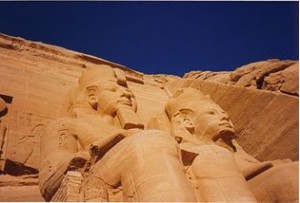
The Great Temple of Ramses II was recovered in front of a fake mountain, built like a basketball dome, where the cubic stone occupies a section under the dome from the outside, the mountain looks like fake rock solid.
Archaeologists have concluded that the immense size statues in the Great Temple were intended to scare potential enemies approaching the southern region of Egypt, as they traveled on the Nile from Africa.

What you will see in Abu Simbel

Great Temple of Ramses II. visit from 06:00 to 17:00. Carved on a mountain between 1274BC and 1244BC, but lost to the world until it was rediscovered in 1813 by the Swiss explorer Jean Louis Burkhart. Dedicated to Ramses II himself and the gods Ra, Amun and Ptah. Features 4 statues of Ramses over 20m. Its axis was placed by the ancient Egyptian architects so that twice a year, in February and October 20th, the sun's rays penetrate the sanctuary and illuminate the sculpture on the wall, except for the statue of Ptah, the God who is always kept in the dark.

Why You Should Visit The Town of Abu Simbel in Upper Egypt

Abu Simbel in Upper Egypt was saved from the rising waters of Lake Nasser, which accumulated behind the Aswan High Dam in a massive archaeological rescue plan sponsored by UNESCO in 1960. The temple complex dedicated to the Pharaoh Ramses II "the Great" is an unforgettable destination to perform in Egypt.
Abu Simbel is a village located 280 km south of Aswan and only 40 km north of the Sudanese border. It is a very small town with very little chance to attract visitors other than its great temples for which it is famous. Few tourists linger more than a few hours, even if there are 5 hotels to attract visitors to stay overnight. 

The temples of Abu Simbel were formerly located further down the hill, facing the Nile, in the same relative positions, but due to the rising waters of Lake Nasser, the original locations are under water. In the 1960s, each temple was carefully sawed into numbered stone cubes, moved up, and reassembled before the water arrives.
Abu simbel voyage egypte ramses II temple 300x203 photo
The Great Temple of Ramses II was recovered in front of a fake mountain, built like a basketball dome, where the cubic stone occupies a section under the dome from the outside, the mountain looks like fake rock solid.
Archaeologists have concluded that the immense size statues in the Great Temple were intended to scare potential enemies approaching the southern region of Egypt, as they traveled on the Nile from Africa.

What you will see in Abu Simbel

Great Temple of Ramses II. visit from 06:00 to 17:00. Carved on a mountain between 1274BC and 1244BC, but lost to the world until it was rediscovered in 1813 by the Swiss explorer Jean Louis Burkhart. Dedicated to Ramses II himself and the gods Ra, Amun and Ptah. Features 4 statues of Ramses over 20m. Its axis was placed by the ancient Egyptian architects so that twice a year, in February and October 20th, the sun's rays penetrate the sanctuary and illuminate the sculpture on the wall, except for the statue of Ptah, the God who is always kept in the dark.

Dahab is a city in Egypt, located about 85 km north of Sharm el-Sheikh on the Gulf of Aqaba, near the southern tip of Sinai. This is a place to which many have fallen in love over the years, and come back again and again. 
Dahab was once an isolated coastline inhabited only by local Bedouins.30 years ago, there were less than 30 Bedouin families in Dahab. As inland Bedouin, they had a way of living, but in Dahab this was based on fishing and traditional herds of goats. During the summer, many interiors in Dahab Bedouin came to fish and gather dates and enjoy life by the sea 
Dahab today has evolved into a "resort alternative" - ​​the home of independent travelers and adventurous, but also with some luxury resorts more upscale and luxury hotels. Most of these are in the Laguna region or devices. 

What to do in Dahab 
In fact, the best thing to do is to rest, the place is ideal for relaxation. Anyway, if you "do" something means "activity" there are a variety of possibilities:
Dahab voyage egypte 300x225 photo- Windsurfing 
- Kite surfing 
- Diving 
- Snorkeling 
- Excursions in the desert 
- Hiking in the desert 
- Climbing 
- Yoga, Reiki, Chi Gong, etc. 
- Horse riding (camel of course!) 
- Quad 
- Learn Arabic

city of Dahab near the southern tip of Sinai

Dahab is a city in Egypt, located about 85 km north of Sharm el-Sheikh on the Gulf of Aqaba, near the southern tip of Sinai. This is a place to which many have fallen in love over the years, and come back again and again. 
Dahab was once an isolated coastline inhabited only by local Bedouins.30 years ago, there were less than 30 Bedouin families in Dahab. As inland Bedouin, they had a way of living, but in Dahab this was based on fishing and traditional herds of goats. During the summer, many interiors in Dahab Bedouin came to fish and gather dates and enjoy life by the sea 
Dahab today has evolved into a "resort alternative" - ​​the home of independent travelers and adventurous, but also with some luxury resorts more upscale and luxury hotels. Most of these are in the Laguna region or devices. 

What to do in Dahab 
In fact, the best thing to do is to rest, the place is ideal for relaxation. Anyway, if you "do" something means "activity" there are a variety of possibilities:
Dahab voyage egypte 300x225 photo- Windsurfing 
- Kite surfing 
- Diving 
- Snorkeling 
- Excursions in the desert 
- Hiking in the desert 
- Climbing 
- Yoga, Reiki, Chi Gong, etc. 
- Horse riding (camel of course!) 
- Quad 
- Learn Arabic
Sharm el-Sheikh  is a very popular resort on the Sinai Peninsula in Egypt, with some of the best scuba diving in the world.
Sharm el-Sheikh is one of the most popular tourist destinations in the Arab world. But there are very good reasons to visit if you are not like ordinary tourists, who like to lie on the beach all day. The city has indeed some of the best diving spots in the world and allows stays in the desert.
Charm el Cheikh egypte voyage 300x225 photo
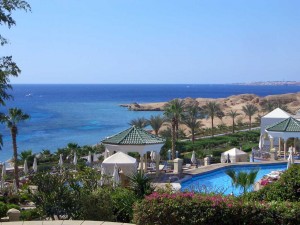
The Sinai Peninsula is a remote desert mountain range. The Rocky Mountains are separated from the deep blue sea by a flat desert strip.This combination of desert and sea is an incredible sight and makes you believe that you are on another planet. 

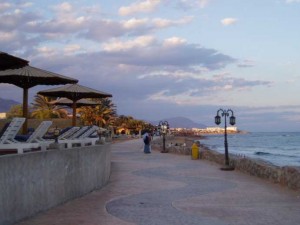
40 years ago, Sharm el-Sheikh was nothing but a small fishing village with about 100 Bedouin citizens. When Sinai was occupied by Israel in 1967 Sharm el-Sheikh began to develop as a tourist destination (like the rest of the peninsula). Israelis evacuated Sinai between 1979 and 1982, after the signing of a peace agreement between the two countries. Since the 1980s, the Egyptians pursued the development of Sharm that the Israelis left. Sharm then grew to become a bustling city of 10 000 inhabitants. There is now a nice promenade, a Hard Rock Cafe, one of the most modern hospitals in Egypt etc ...

Discover Sharm el-Sheikh on the Sinai Peninsula in Egypt

Sharm el-Sheikh  is a very popular resort on the Sinai Peninsula in Egypt, with some of the best scuba diving in the world.
Sharm el-Sheikh is one of the most popular tourist destinations in the Arab world. But there are very good reasons to visit if you are not like ordinary tourists, who like to lie on the beach all day. The city has indeed some of the best diving spots in the world and allows stays in the desert.
Charm el Cheikh egypte voyage 300x225 photo
The Sinai Peninsula is a remote desert mountain range. The Rocky Mountains are separated from the deep blue sea by a flat desert strip.This combination of desert and sea is an incredible sight and makes you believe that you are on another planet. 

40 years ago, Sharm el-Sheikh was nothing but a small fishing village with about 100 Bedouin citizens. When Sinai was occupied by Israel in 1967 Sharm el-Sheikh began to develop as a tourist destination (like the rest of the peninsula). Israelis evacuated Sinai between 1979 and 1982, after the signing of a peace agreement between the two countries. Since the 1980s, the Egyptians pursued the development of Sharm that the Israelis left. Sharm then grew to become a bustling city of 10 000 inhabitants. There is now a nice promenade, a Hard Rock Cafe, one of the most modern hospitals in Egypt etc ...